
Top 7 AI Skills Every Student Should Learn Before Starting a New Job
The workplace is evolving at an unprecedented pace, and as a student preparing to launch your career, staying ahead of the curve is no longer just an option—it is a necessity. At the Academy of Learning Brampton West, we constantly monitor industry trends to ensure our students graduate with the tools they need to succeed. Today, the most significant shift across every industry—from healthcare administration to business management and IT—is the integration of Artificial Intelligence (AI).
You do not need to be a computer scientist or a software engineer to benefit from AI. In fact, modern AI tools are designed for everyday professionals. Employers are actively seeking candidates who can use these technologies to boost productivity, solve complex problems, and streamline workflows.
Whether you are stepping into your first job or transitioning to a new career path, mastering artificial intelligence tools will give you a massive competitive edge. Here are the top seven AI skills every student should learn before stepping into the modern workplace.
1. Prompt Engineering: The Art of Talking to AI
If there is one foundational AI skill you must learn, it is prompt engineering. Think of an AI like a highly intelligent, incredibly fast intern who takes everything you say quite literally. If you give vague instructions, you will get vague, unhelpful results. Prompt engineering is the skill of writing clear, precise, and context-rich instructions to get the best possible output from generative AI models like ChatGPT, Gemini, or Claude.
Why it matters in the workplace:
- Efficiency: Knowing how to ask the right questions saves you hours of back-and-forth revisions with an AI tool.
- Quality Control: A well-crafted prompt dictates the tone, format, and exact details you need for professional emails, reports, or project outlines.
How to practice: Start using the “Context, Task, Format, Persona” framework. Instead of asking an AI to “write an email about a meeting,” try: “Act as a medical office administrator. Write a polite, 3-paragraph email to a patient reminding them of their upcoming appointment, formatted with bullet points for the date and time.”
2. AI Literacy and Ethical Awareness
Understanding how to use AI is important, but understanding when and why to use it is just as critical. AI literacy involves having a fundamental grasp of what artificial intelligence is, how machine learning models generate information, and most importantly, their limitations.
Why it matters in the workplace: Employers need professionals they can trust. AI models can sometimes “hallucinate” (invent facts) or inadvertently plagiarize content. Furthermore, inputting sensitive company data or personal client information into public AI models can lead to severe privacy breaches.
Key ethical concepts to master:
- Data Privacy: Knowing what information is safe to share with AI and what must remain confidential.
- Bias Recognition: Understanding that AI models are trained on human data and can sometimes replicate human biases.
- Fact-Checking: Developing the habit of verifying AI-generated statistics, quotes, and claims against reliable, primary sources before presenting them to your boss or team.
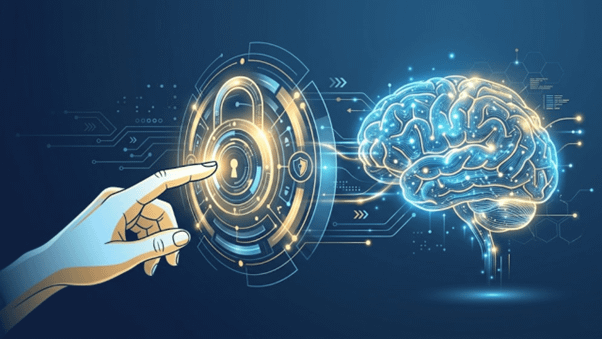
Alt Text: Conceptual illustration representing AI ethics, data privacy, and secure technology in the modern workplace.
3. Data Analysis and Interpretation
Data is the lifeblood of the modern business world. You don’t need a degree in data science to work with data anymore, thanks to AI. Modern tools can take massive spreadsheets and instantly generate summaries, identify trends, and create visual charts. However, the human skill lies in interpreting that data to make actionable business decisions.
Why it matters in the workplace: Imagine you are working as a business administrator and your manager hands you a spreadsheet of customer feedback from the last six months. By utilizing AI tools, you can quickly find the most common complaints or praises.
How to leverage this skill:
- Learn how to upload datasets into secure AI platforms to find anomalies or trends.
- Practice asking AI to explain complex data points in simple terms.
- Focus on developing your critical thinking skills so you can explain the “why” behind the data to your team, combining AI’s computational power with your human intuition.
4. Workflow Automation and AI Integration
One of the greatest benefits of AI is its ability to take over mundane, repetitive tasks, freeing you up to do meaningful, high-level work. Automation skills involve identifying bottlenecks in your daily routine and deploying AI tools to fix them.
Why it matters in the workplace: An employee who can do their job well is valuable. An employee who can figure out how to do their job twice as fast while maintaining quality is indispensable.
Examples of automation to explore:
- Meeting Summaries: Using AI meeting assistants to automatically transcribe video calls and generate a list of action items.
- Email Sorting: Setting up smart filters that categorize client inquiries based on urgency.
- Task Chaining: Learning basic integrations (like using Zapier alongside AI) to automatically turn an email into a task on your project management board. When you start a new job, taking the initiative to automate your workflow shows incredible leadership and technological proficiency.
5. AI-Assisted Content Creation
Regardless of your job title, you will likely need to write. Whether it is drafting memos, creating marketing copy, assembling newsletters, or writing standard operating procedures, content creation is a universal workplace task. AI language models are exceptional co-writers.
Why it matters in the workplace: Staring at a blank page (writer’s block) costs businesses time and money. AI can provide you with a first draft in seconds, giving you a foundation to build upon.
How to excel in this area:
- The “First Draft” Rule: Use AI to generate the messy first draft, then use your human expertise to edit, refine, and inject your company’s unique brand voice.
- Formatting: Use AI to transform a bulleted list of raw thoughts into a formal report, or conversely, summarize a 10-page document into a one-page brief for your manager.
- Tone Adjustment: Learn how to ask AI to rewrite a draft to be “more professional,” “more persuasive,” or “more empathetic” depending on the audience.
6. AI as a Brainstorming and Problem-Solving Partner
Sometimes, the hardest part of starting a new project is generating fresh ideas. AI isn’t just a tool for executing tasks; it is a powerful collaborative partner. Treat AI as a sounding board that is available 24/7.
Why it matters in the workplace: Employers value proactive problem solvers. If you run into a roadblock, consulting an AI can provide you with diverse perspectives you might not have considered.
How to use AI for problem-solving:
- Role-playing: Ask the AI to act as a skeptical client or a strict manager and have it critique your project proposal before you present it for real.
- Ideation: Ask for “20 out-of-the-box ways to improve office morale” or “10 potential solutions for reducing client wait times.” You may throw away 15 of them, but the remaining 5 could be game-changers.
- Overcoming roadblocks: If you are stuck on a formula in Excel or a piece of administrative software, describe the problem to an AI assistant to get step-by-step troubleshooting advice.

7. Continuous Learning and Adaptability
The final—and perhaps most important—AI skill is not a technical capability, but a mindset. The AI tools we use today will look drastically different a year from now. Therefore, the ability to learn, adapt, and unlearn is your greatest asset.
Why it matters in the workplace: Technology changes, but the willingness to adapt remains permanently valuable. Employers want to hire lifelong learners who are not intimidated by new software updates or shifting industry standards.
How to cultivate adaptability:
- Dedicate 15 minutes a week to reading up on new AI trends in your specific industry.
- Do not be afraid to experiment with new tools during your downtime.
- Embrace a “growth mindset.” When a new system is introduced at your workplace, be the first to volunteer to learn it.
Your Future Starts at Academy of Learning Brampton West
The future of work is not about AI replacing humans; it is about humans who use AI replacing those who do not. By mastering prompt engineering, ethical usage, data analysis, automation, content creation, collaborative brainstorming, and maintaining an adaptable mindset, you will position yourself as an invaluable asset to any employer.
At the Academy of Learning Brampton West, we are committed to providing our students with forward-thinking, career-focused education. Our programs are designed not just to help you get a job, but to help you thrive in the modern workplace.
Are you ready to take the next step in your career journey and embrace the skills of the future? Contact Academy of Learning Brampton West today to explore our diverse range of diploma and certificate programs. Let us help you build a resilient, successful career in an AI-driven world.